



Hybrid Culture: The Ultimate Guide for 2024
Managing a hybrid workplace? You need to build a hybrid culture
Hybrid workplaces aren’t simply about having the right tech stack or a well-thought-out flexible policy (although those are indeed very important).
They require building a hybrid company culture where all employees feel a part of a team, regardless of their schedule or location preferences, and regardless of where they are right now.
For this, you need to make sure that:
- Communication flows easily between all employees at all times
- Everyone has access to the tools and information they need to do their best work
- All employees have the same growth opportunities without any proximity bias
As a leader, your role is crucial in all this.
The core components of a successful hybrid culture
Creating a successful hybrid corporate culture isn’t just about creating a hybrid workplace policy and calling it a day. Instead, you need to (re)define your values and make sure everyone feels engaged and seen.
Here are the key elements you need to consider when designing a hybrid-first culture:
Flexibility and autonomy
A hybrid workforce needs flexible work arrangements to thrive.
When employees have the freedom to choose where and when they work, you’re essentially giving them agency and showing them that you trust them to do their job well.
By allowing your team to manage their own schedules and workdays, you empower them to design a workplace that fits their needs; being able to bring your entire person to work is a key element to this, and autonomy is key.
Technology (tools and more)
Technology plays a key role in shaping your hybrid culture. Tools like video conferencing apps, instant messaging systems, desk booking apps, and project management software make collaboration easier – but they aren’t the be-all, end-all of hybrid work. Technology is the enabler that makes hybrid work possible, but it’s just one piece of the puzzle.
If you just buy the apps but don’t give your team the freedom and support to actually do their work well, you’re just ticking boxes, rather than building a culture.
Inclusive communication
Inclusive communication ensures that every employee, whether mostly remote or mostly in-office, has equal access to information and can participate in all discussions.
Encourage open communication and make sure everyone participates in important meetings by making them remote-first. Additionally, you can use asynchronous updates (Slack and MS Teams channels are perfect for this) to make sure that remote workers are never left out of the loop.
Fair and equitable growth opportunities
In a hybrid workplace, it’s crucial to provide the right employee development opportunities for everyone. These need to be based on skills and merit, rather than on the amount of time spent in the office.
Simply put, whether someone works remotely or mostly in the office, they should receive the same recognition and have the same chances for promotion, career development, and visibility.
For this, you need transparent performance metrics and evaluation systems, and predictable and clear promotion policies.
Employee well-being and support
Supporting employee well-being is essential in any type of workplace, but in a hybrid environment, it might require more intentional effort on your part.
Digital fatigue can result from excessive screen time and back-to-back virtual meetings – and hybrid and remote employees are particularly prone to it.
Encourage regular breaks, promote a healthy work-life balance, and provide resources for mental health support, including a healthcare plan that covers consultations with mental health specialists.
Rethinking office spaces: How to build a hybrid space that works for everyone
Successful hybrid office spaces are flexible and adaptable, supporting your people’s needs to:
- Work together, have meetings, and chat about work and non-work related topics, and
- Do focused work without distractions
For this, you need to design office spaces that support both collaborative and individual work, and which employees can book easily, ideally from their primary communication channel (Slack or MS Teams). And, of course, facilitate remote work -- which employees clearly value.
Work-from-home preferences
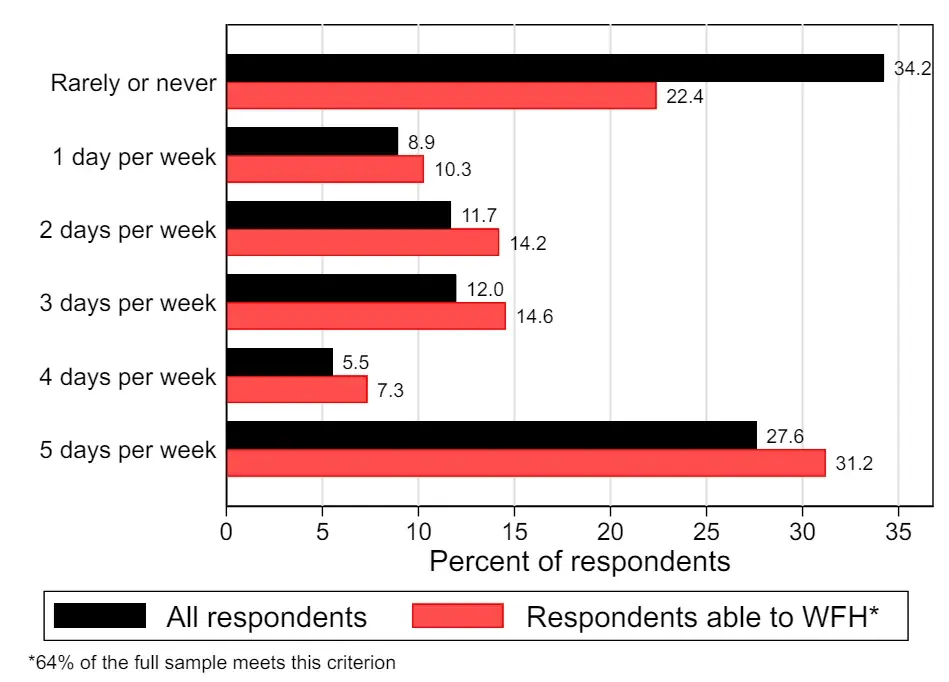
Most workers want to work from home at least one day per week or more (source)
One popular concept in a hybrid work environment is hot desking, where employees don’t have assigned desks but instead choose where to sit based on their tasks and preferences. This helps you optimize space usage and encourages employees to move around and interact with different team members.
Additionally, you need to ensure that all workspaces are comfortable and ergonomically designed – including home offices, which become an extension of your office space. Provide adjustable chairs, comfortable desks (including standing desks), and good lighting – and an adequate home office budget.
Goals and results: How to track performance and productivity in a hybrid environment
In a hybrid culture, it’s only natural to want to shift the focus from hours worked to results achieved. This approach ensures that all employees, regardless of where they work, are evaluated fairly based on the work done, rather than on the time spent in the office.
Tracking productivity in a hybrid setup might require a slightly different approach, but if you’re already focused on results rather than physical presence, the changes won’t be drastic – and if you aren’t, now is the perfect time to make the switch.
Here are a few effective methods:
- Set clear KPIs that are easy to measure: Define specific, measurable goals and key performance indicators (KPIs) for your team and give them the tools they need to look at their results.
- Regular check-ins and updates: Schedule regular virtual-first check-ins with your team to discuss progress, fix issues, and give feedback. This helps keep everyone in sync and on track.
- Use project management tools: Implement project management software to track tasks, deadlines, and progress. Tools like Asana, Trello, or Monday.com provide visibility into what everyone is working on and help manage workloads efficiently.
- Focus on outcomes: Evaluate employees based on the quality and impact of their work, rather than the number of hours or their location. This approach encourages efficiency and empowers employees to work in ways that suit them best.
Building a community: How to create a sense of belonging in a hybrid environment
When working remotely, it’s easy to feel disconnected from the team, so creating a sense of belonging is key to building a strong company culture.
There are a few creative ways to boost the team’s spirit:
- Team-building activities: Organize events like online games, trivia nights, or happy hours regularly, to encourage people to come to the office. Those don’t have to break the bank to be impactful; check out our selection of the best affordable team-building activities for ideas.
- Social check-ins: Schedule regular, informal check-ins that aren’t focused on work – or dedicate time for those around other regular meetings. This could be a virtual coffee break or a lunch meeting where team members can chat.
- Hybrid team projects: Encourage team collaboration by assigning projects to cross-functional teams from different locations. This not only improves teamwork (and outcomes!) but also helps ensure the free flow of ideas and perspectives.
Additionally, you need to make sure meetings are inclusive; for this, they need to be remote first. Use video conferencing tools so that everyone can join easily. Send out agendas in advance and ensure everyone has a chance to speak. Consider having a designated moderator for each meeting and make sure everyone gets a chance to speak.
You can also design mentorship or buddy programs where new hires are paired with more experienced colleagues, regardless of location preferences (don’t match those who prefer coming to the office with other in-office workers only!). This helps build stronger one-on-one connections and a sense of community.
Leadership in a hybrid workplace: How to lead a hybrid team successfully
Managing hybrid teams requires a unique set of skills and a mindset of flexibility and openness – and being very aware of potential biases (such as proximity bias) that might seep in and undermine your efforts to be an effective leader.
Top leadership skills in a hybrid environment
There are a few key skills that’ll make it easier for you to manage hybrid and remote teams:
- Empathy and emotional intelligence: Not everyone expresses their needs and frustrations in the same way; plus, those who work remotely might become even less visible, if you don’t pay special attention to the cues they give you.
- Communication skills: Clear and effective communication helps you make sure everyone is on the same page, regardless of their location. Writing skills are a must.
- Tech skills: Proficiency with all the digital tools and platforms your team uses will ensure smooth collaboration.
- Visionary thinking: You’re the one who’ll set the team’s direction, and for this, you need a clear vision and the capacity to inspire others.
- Goal setting and tracking: Set clear goals and track progress in a transparent way to keep everyone focused and accountable.
- Resourcefulness and creative problem-solving: Hybrid working models come with their own set of challenges, so finding new solutions is key for helping your team adapt and thrive.
Trust and empowerment: The cornerstones of a successful hybrid work model
Building a culture of trust and empowerment is crucial for hybrid working environments.
When employees feel trusted, they are more likely to take initiative and feel a stronger sense of ownership over their work. Give team members the autonomy to make decisions and the support they need to succeed – and you’ll empower them to do more and do it better.
Managing workloads and preventing burnout
Helping team members manage their workloads is a key aspect of your role as a leader. Here are a few things you can do:
- Encourage employees to set clear boundaries between work and personal life. When working from home, this might mean having a dedicated workspace and set working hours. When coming to the office, this might involve flexible hours to reduce long commutes.
- Build a culture that values work-life balance. Encourage regular breaks and time off, and make sure your employees can focus on their families and hobbies. Lead by example and show that it’s okay to unplug and recharge.
- Monitor workloads. Keep an eye on to-dos to ensure that no one is feeling overwhelmed – because not everyone will be vocal about it. Use project management tools to distribute tasks evenly and see when someone might need extra support.
Creating a thriving hybrid culture requires intentional effort – and the right tools
Building a successful hybrid culture requires the right mindset, tools, and strategies. You need to make it easy for employees to change locations and book a desk at the office based on their needs on any given day – and give them the freedom to organize their workdays in the way that’s best for them.
Equip your team with a simple-to-use desk booking app like Officely to boost flexibility and ensure that office resources are used efficiently. With it, employees will be able to see who’s working where each day, so they can choose the best place to work.
Simply put, with Officely, everyone on your team will be able to decide when is the best time to come to the office – after all, nobody wants to come in for lunch with their coworkers only to find that no-one else is there – and reap all the benefits of having a flexible work environment.


