



What Is Proximity Bias? A Guide for Hybrid Teams
How Do You Prevent Proximity Bias?
Half of the battle with any subconscious thought is recognizing that it exists.
Now you’ve established proximity bias as a potential issue, here’s how your hybrid workplace can avoid it:
Be Proactive About Checking In
When you’re in the office, how many times do you bump into colleagues in the kitchen? Or exchange pleasantries throughout the day?
Those little check-ins add up. You’re learning more about those individuals and getting to know them better for it. Obviously, this is a positive thing, but it doesn’t need to be exclusive to those in the office.
Use an instant messaging app to keep in touch with your remote employees; ask how their weekend is, find out how their work is going, and have informal chats throughout the week.
Providing employees who work from home with more opportunities to talk with you will also build rapport from their side and make reaching out more natural when problems arise.
Prioritize Remote-First Communication
If you’ve adopted a hybrid work model, your central place of communication should not be in-person, in the office.
Use a communication tool like Slack to maintain a consistent form of communication whether at home or in the office and ensure every meeting has a Zoom link as a best practice.
Getting into the habit of doing this means people will feel comfortable working from home without the risk of being left out. We’ve all had to send a ‘Can you send me a Zoom link’ message to a colleague who’s forgotten to add one to the calendar.
Make it Easy for Employees to See Each Other
Proximity bias doesn’t only occur when managing people, it also occurs when employees don’t see each other in person.
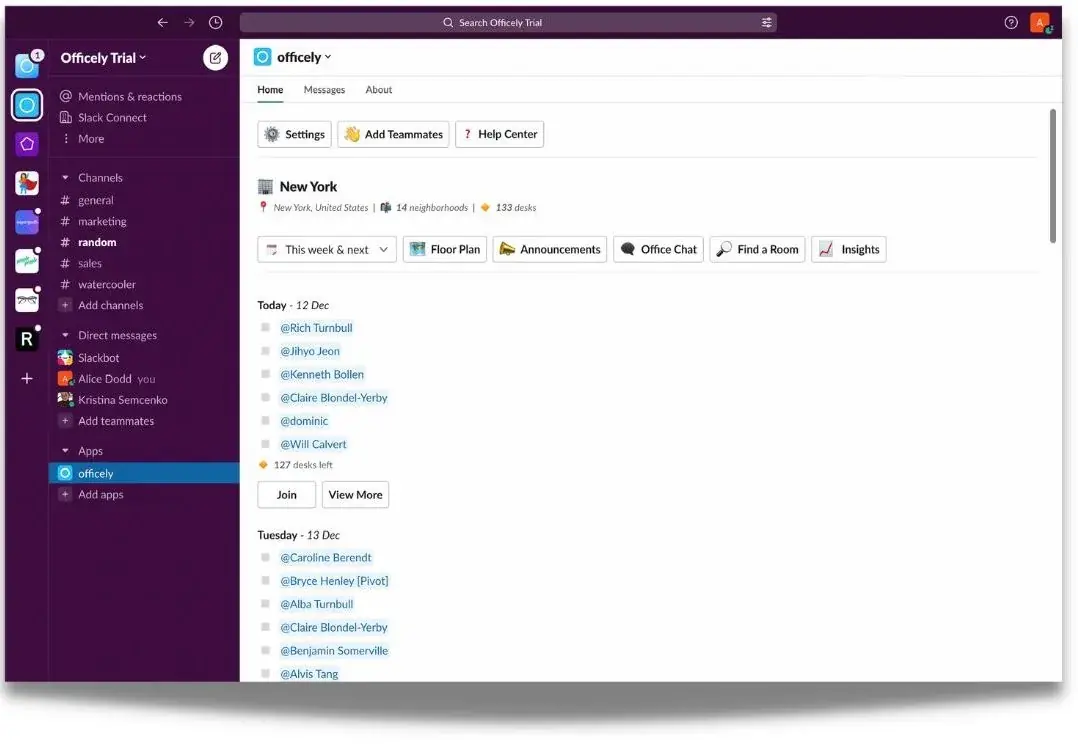
The easiest way to make sure your team is connecting with one another is by using a tool that allows employees to see who’s in the office and when.
Officely is a desk booking tool that lives in Slack. It enables employees to see who’s in the office, find out what’s happening each day, and book in themselves.
Managers can send out invites for teams to come in on particular days, and your team can send out announcements if something important is happening in the office that requires attendance.
When a new employee starts, for example, you can encourage your team to come in and meet them in person. This helps to build connections between team members and prevent proximity bias from the start.
Build (and stick to) Performance Reviews
Employees in the same role or at the same level should have performance reviews to assess promotions and opportunities.
Having set performance reviews and 1-1s avoids one of the biggest issues of proximity bias – the tendency to put office workers up for promotion more than remote workers.
If you have a quota that individuals have to meet, you’ll know whether your decision has come from preference and capability. Define responsibilities and expectations at your hybrid workplace so both you and your team are aware of what progression looks like for their role.
Define Your Hybrid Working Policy
The most important thing you can do as a hybrid workplace is to define your hybrid working policy. Unsurprisingly, this also impacts proximity bias as everyone has the same expectations in the workplace, preventing penalization of those who work from home more than others.
Your hybrid work policy should contain:
- How many days per week/month/quarter your employees must be in the office (remote-first)
- How often employees are allowed to work from home (office-first)
- What software employees must have to maintain communication within the team
- Health and well-being benefits for all employees, both remote and in-office
If you’re unsure where to get started, you can use our hybrid work policy builder for your own customizable template.


