



Build a positive work culture
Your business’ work culture is the number one way to encourage your employees to return to the office.
Those who feel motivated and valued by their company are more likely to want face-to-face time with their colleagues, be motivated to increase collaboration prospects, and take part in any extra activities taking place.
If your office space is offering a welcoming environment to work from instead, attending the office is the natural solution to the feeling of isolation experienced when working from home.
Offer flexible working
While it may sound counterintuitive, giving your employees the opportunity to work flexibly reduces absenteeism and increases office attendance in remote-first hybrid work models.
If employees are able to balance work and other commitments no matter where they work, attending the office stops being a blocker to work-life balance.
Examples of this could be flexible hours or compressed workweeks. If employees are empowered to work flexibly, they can factor in commuting, school drop-offs, and healthcare appointments while also attending the office.
Flexible working shows businesses care about their employees, which in turn promotes productivity and boosts team morale. Employees are more likely to attend the office to build connections with colleagues and managers if they feel valued as individuals.
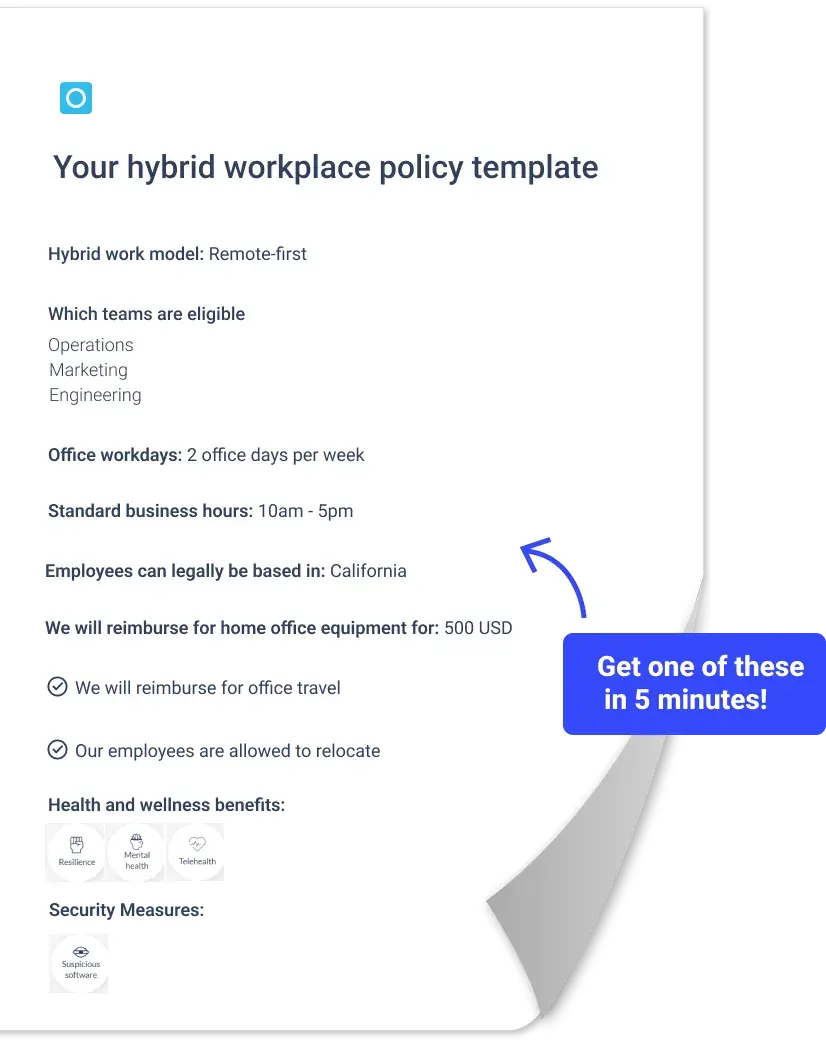
Use our hybrid work policy builder to get started.
Lead by example
If you expect your employees to increase their office attendance, those at the top should be the first to set the example.
Companies that prioritize setting an example from the top down demonstrate inclusivity and avoid a culture of ‘do as I say not as I do.’
Not only does leading by example encourage employees to act in the same way as their seniors, it also enables employees to have face-to-face interactions with those they want to see in the office.
Slack messages hold little weight against seeing somebody in person. If an employee is trying to build rapport with senior leadership, they are more likely to attend the office when they know that person will be in.

Provide employees with attendance visibility
So, if you’re leading by example, how do you make it easy for employees to see who’s in the office?
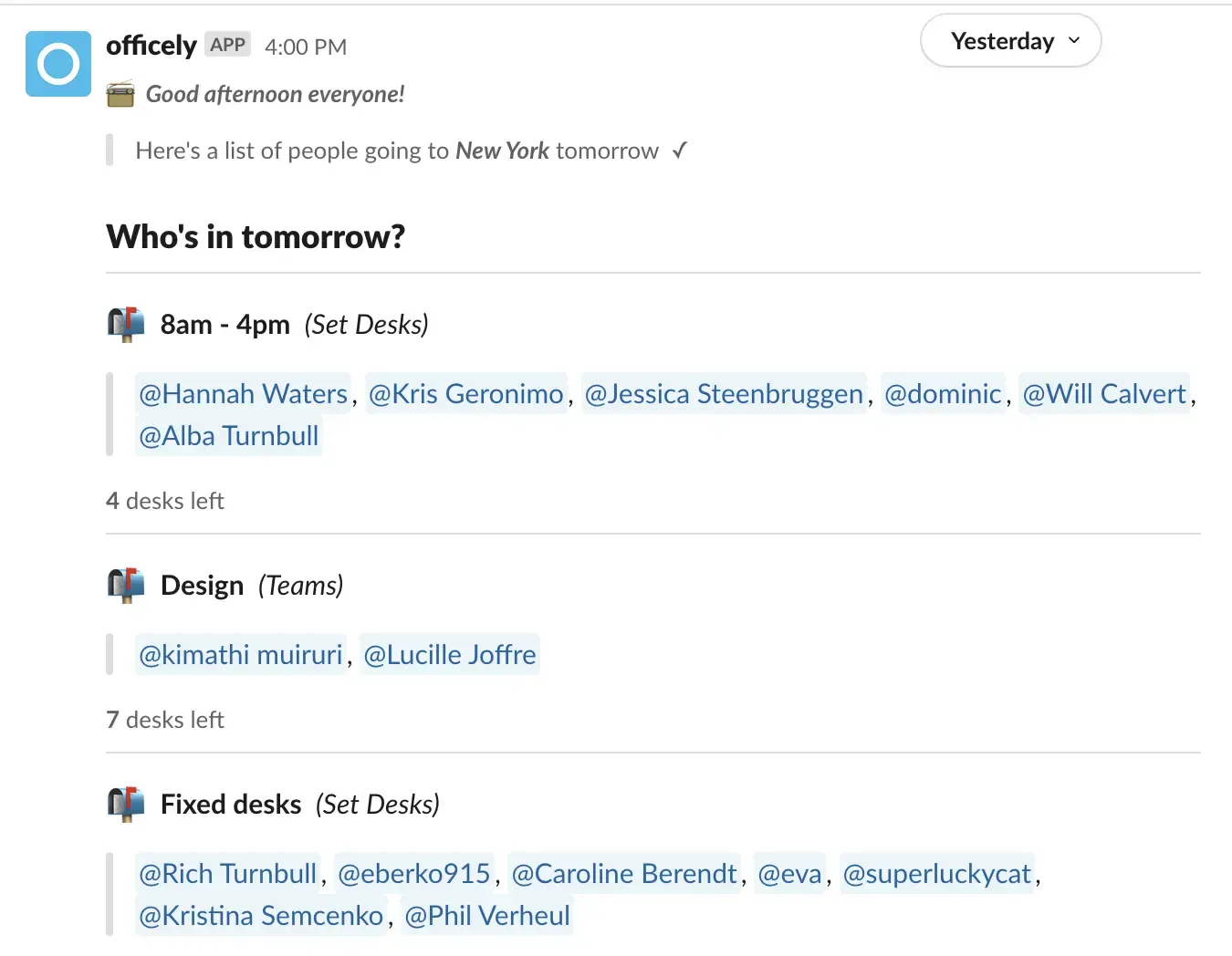
Use a desk booking tool to show who has booked in, and what else is happening each day.
Whether to join team drinks, sync up with a team lead, or have a chat with a favorite colleagues, visibility is essential to incentivize your employees to attend the office.
People want to see people; if you’re working from the office alone you may as well be at home.
Identify and address individual concerns
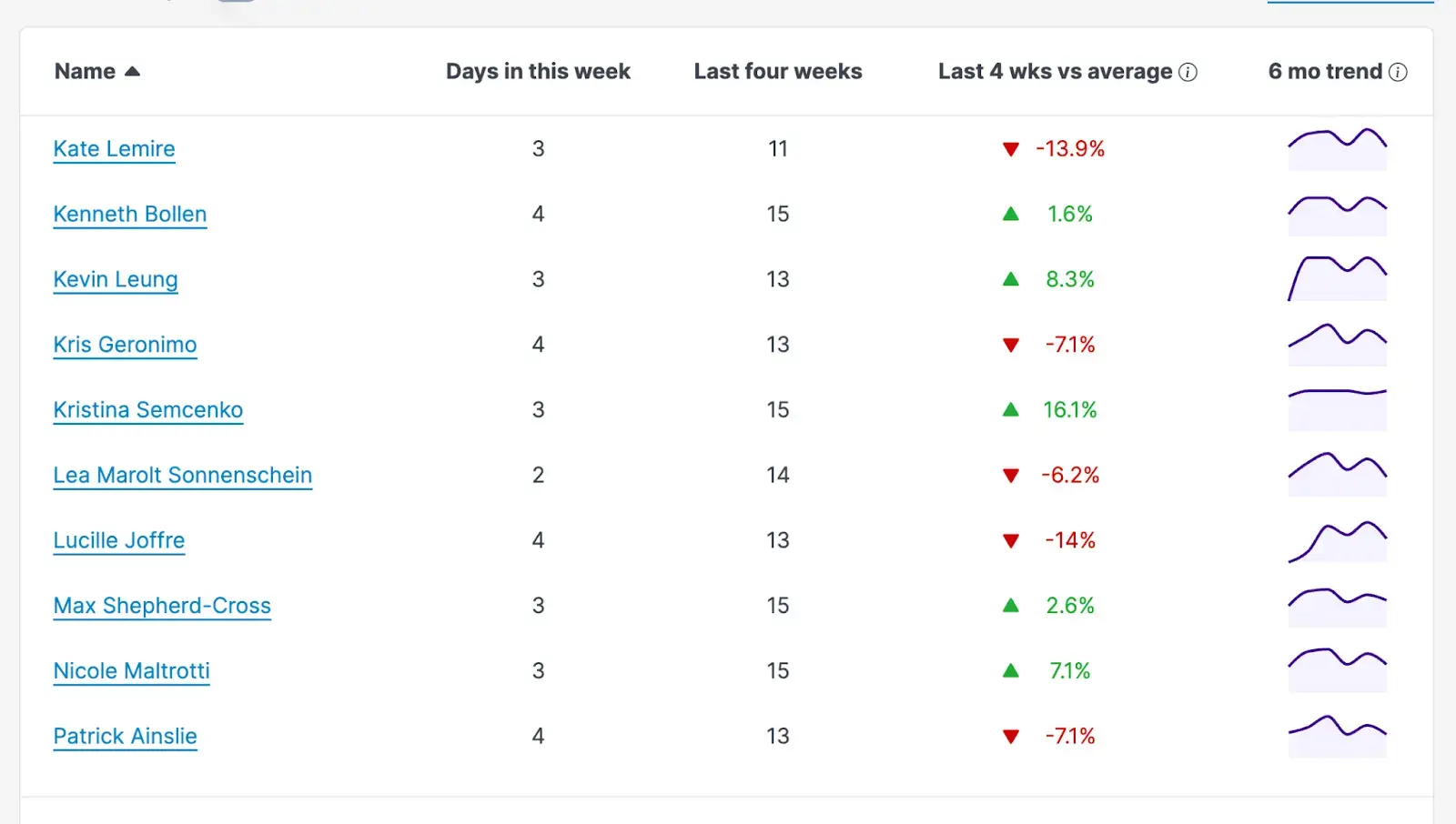
Another important element of visibility software is the ability to track attendance trends and booking data.
Booking insights provide businesses with the opportunity to identify underlying issues that may be affecting attendance. An employee whose attendance dramatically drops over a month may be experiencing problems with workload or job satisfaction.
Trends and data on teams and overall company attendance are also important to track how organizational changes or management styles are impacting employees' attendance rates.
If you’re choosing software for your office, make sure to find one with a data and analytics feature you can export and track.
Insights on attendance enable businesses to preempt employees quitting, address management concerns, and understand why employees come into the office when they do.
Offer networking opportunities
It’s up to your business to use the pull of networking to its advantage by providing opportunities for employees and teams to meet.
Incentivize attendance with team events that will encourage collaboration and introduce colleagues to one another.
Hosting team drinks, bringing in guest speakers, and hosting breakfasts are all ways to encourage participation and networking between employees.
As the Linkedin adage goes, offering socials should not replace work-life balance benefits. However, socials do increase office attendance and shows employees that you’re interested in their professional development.
(Just make sure to prioritize employee well-being in other ways too.)


